Ballet in Cuba
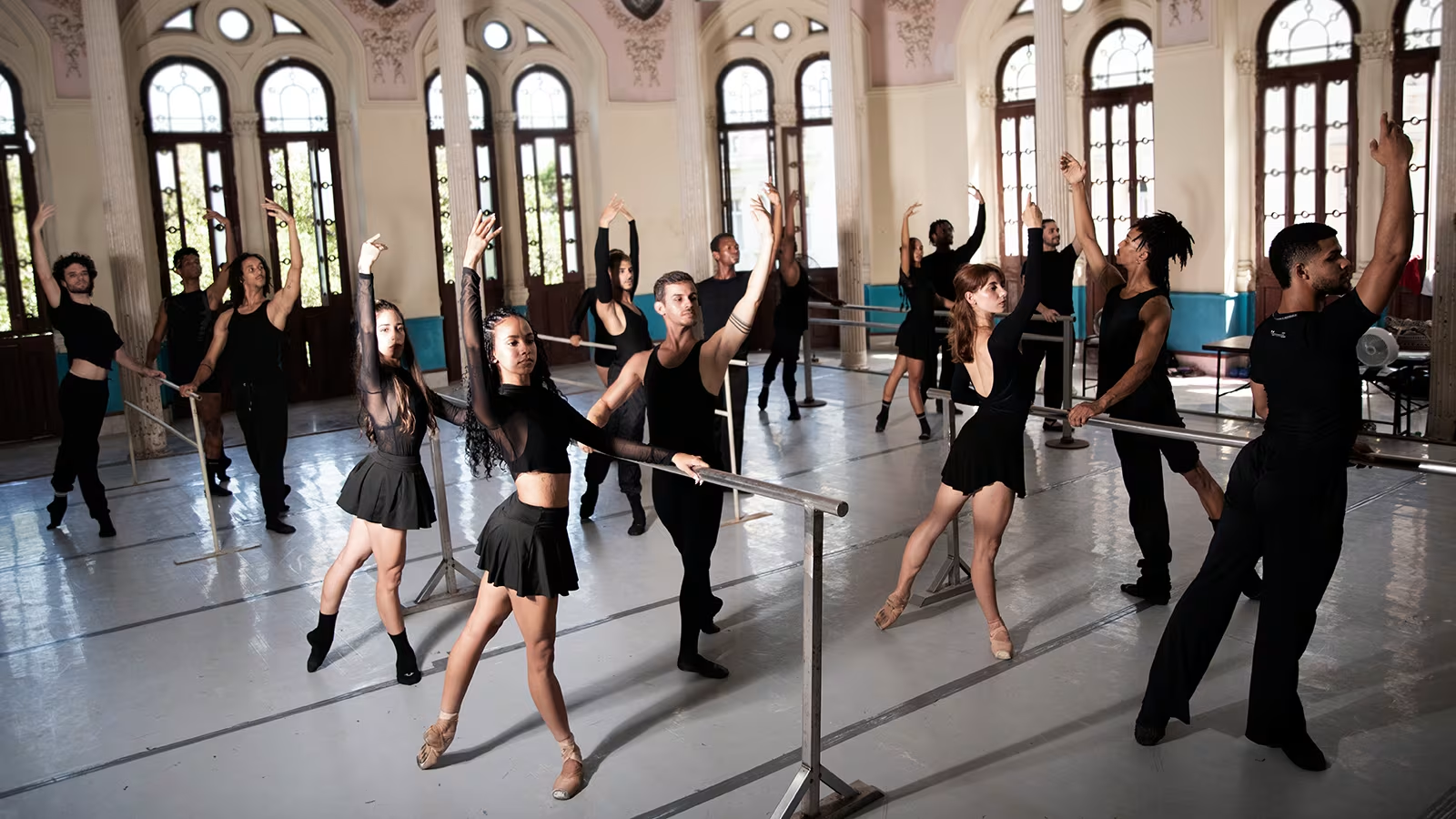
Cuba has its own, uniquely Cuban ballet style: the Cuban School. It is a fusion of the French, Russian, British, and American schools with Cuba’s multicultural roots. This globally renowned style was created by the great Alicia Alonso, the grande dame of Cuban dance. It forms the foundation of one of the world’s finest dance training programs at the state university in Havana.
Modern Dance in Cuba
Modern dance reached Cuba in the 1950s, relatively late in the game. Modern dance—the earthbound counterpoint to the skyward-reaching classical ballet—had already experienced its first heyday in Europe and the U.S. as early as the 1920s and 1930s. But what the Cubans made of these new influences is unique and continues to give them a privileged position in the international dance scene to this day.
Much like Alicia Alonso in classical ballet, the protagonists of modern dance in Cuba—led by Ramiro Guerra Suárez—fused European-American modern dance with Cuban movement traditions. This gave rise to a unique style of movement.